Building digital solutions for healthcare.
Welcome! I'm Javad M Alizadeh, a PhD Candidate in Health Informatics at Temple University. This website showcases my research on Digital Twins, LLMs, Agentic AI, RAG, and Conversational AI AI for chronic disease management and community health.
Tools in the field
Software that turns complex clinical, geospatial, and community data into insights and conversations providers and people can act on.
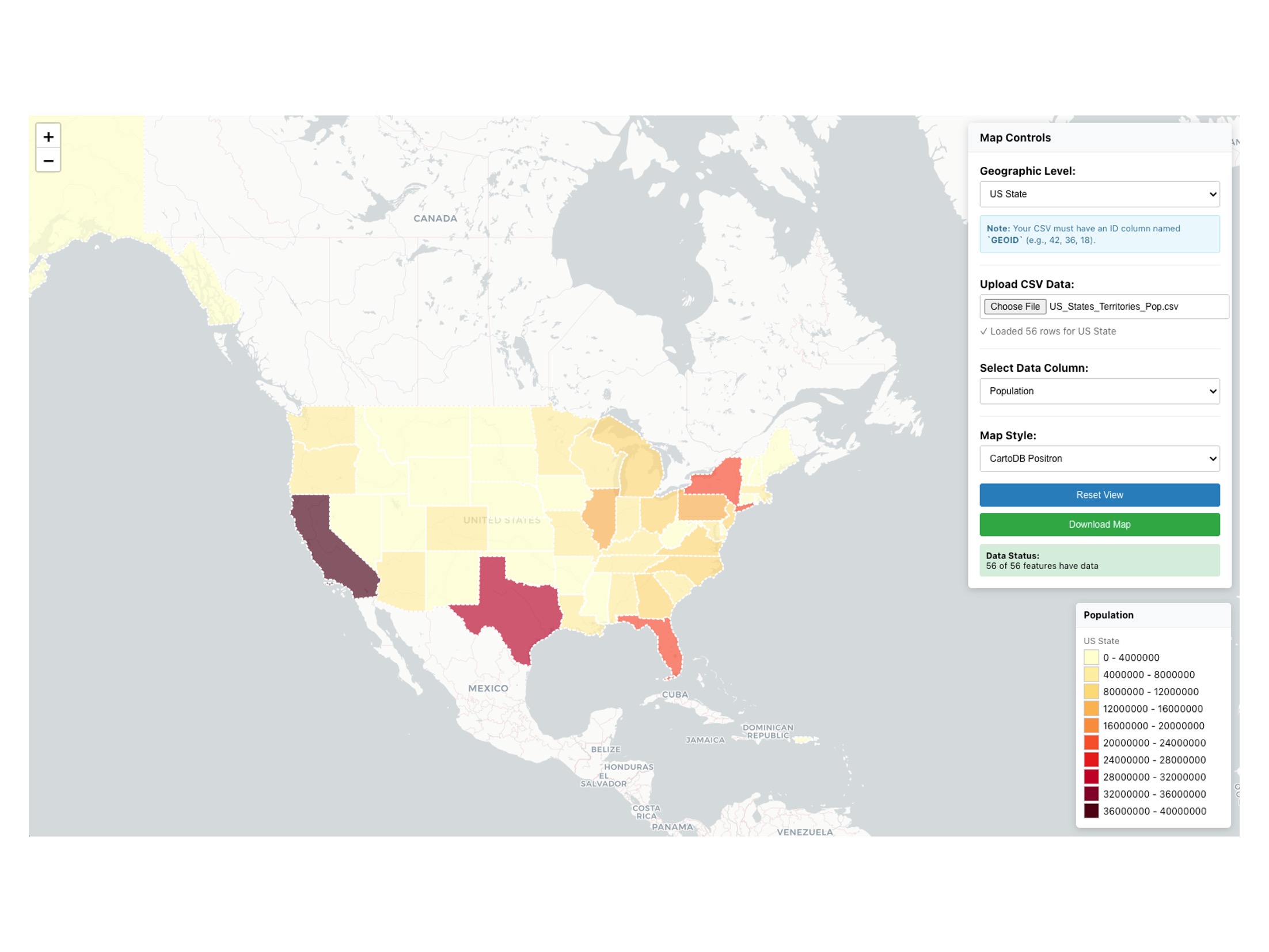
Choropleth Map Generator
A web tool for rapid geospatial visualization. Upload a CSV and instantly map data across countries, US states, or ZIP Code Tabulation Areas, built for public-health analysts and researchers.
Open application →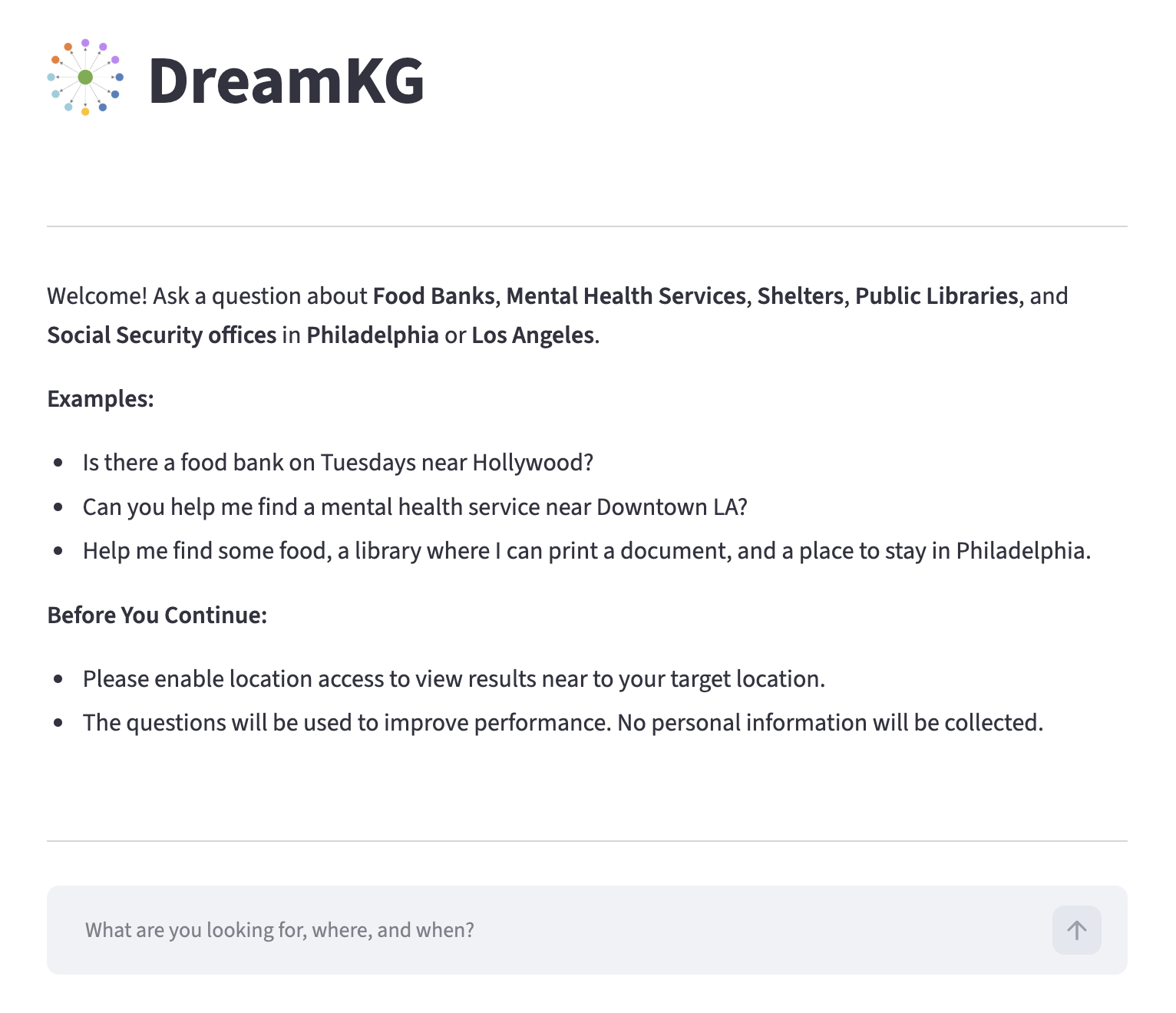
Dream KG
A knowledge graph-powered conversational system for connecting people experiencing homelessness with verified community services. Combines LLMs with structured spatial and temporal reasoning to deliver accurate, location-aware, and up-to-date service recommendations.
Open application ↗Research & Innovation
Digital twins, predictive modeling, and knowledge-graph systems applied to Type 2 diabetes management, Oral Health, and personalized community health.
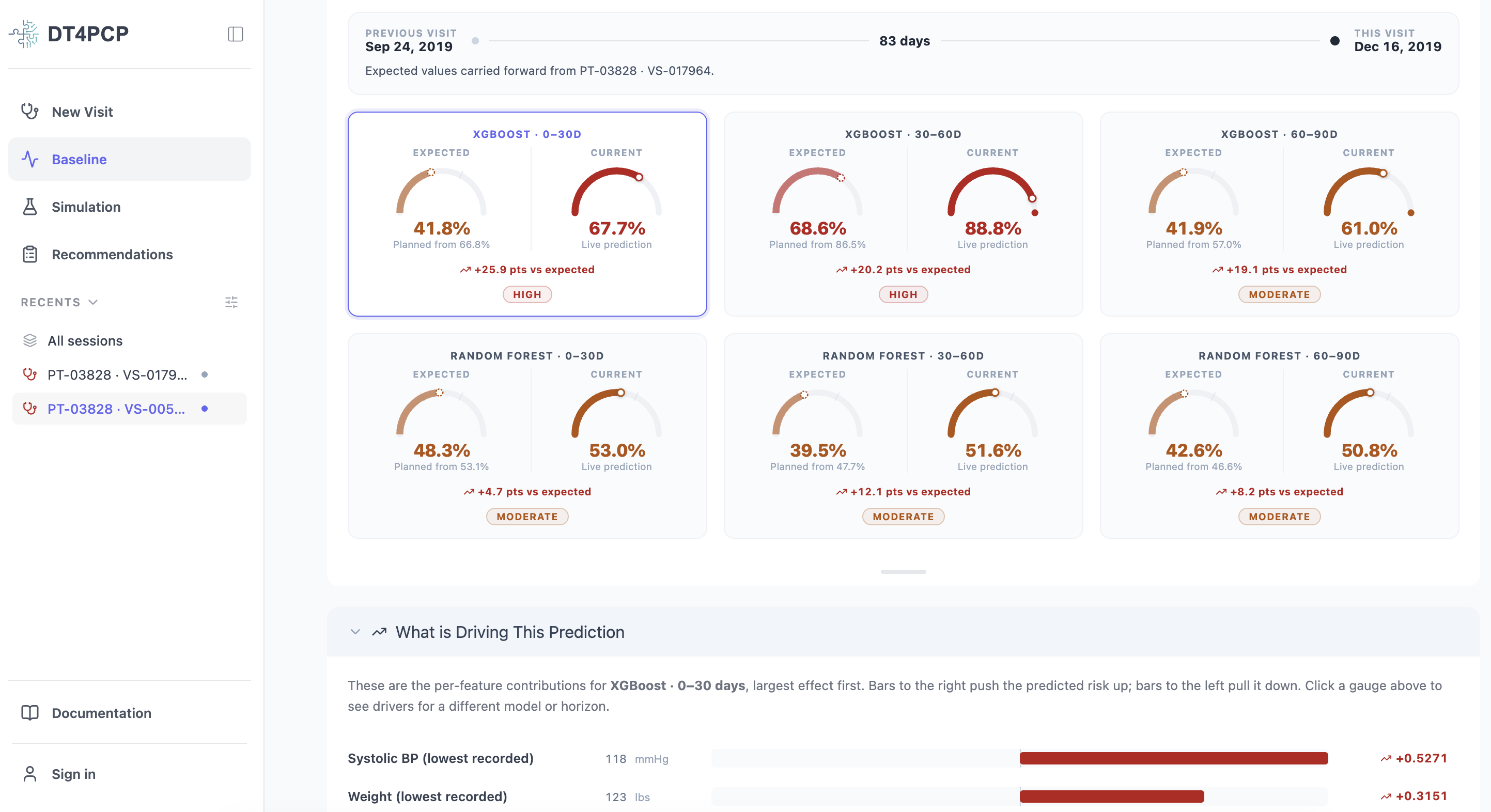
DT4PCP v2.0: Digital Twin Framework for Personalized Care Planning
A working, browser-based version of DT4PCP for Type 2 diabetes: load a patient encounter, get an emergency-department risk prediction with a full SHAP breakdown, run a design-of-experiments simulation to find risk-lowering scenarios, and get AI-generated care recommendations.
More details →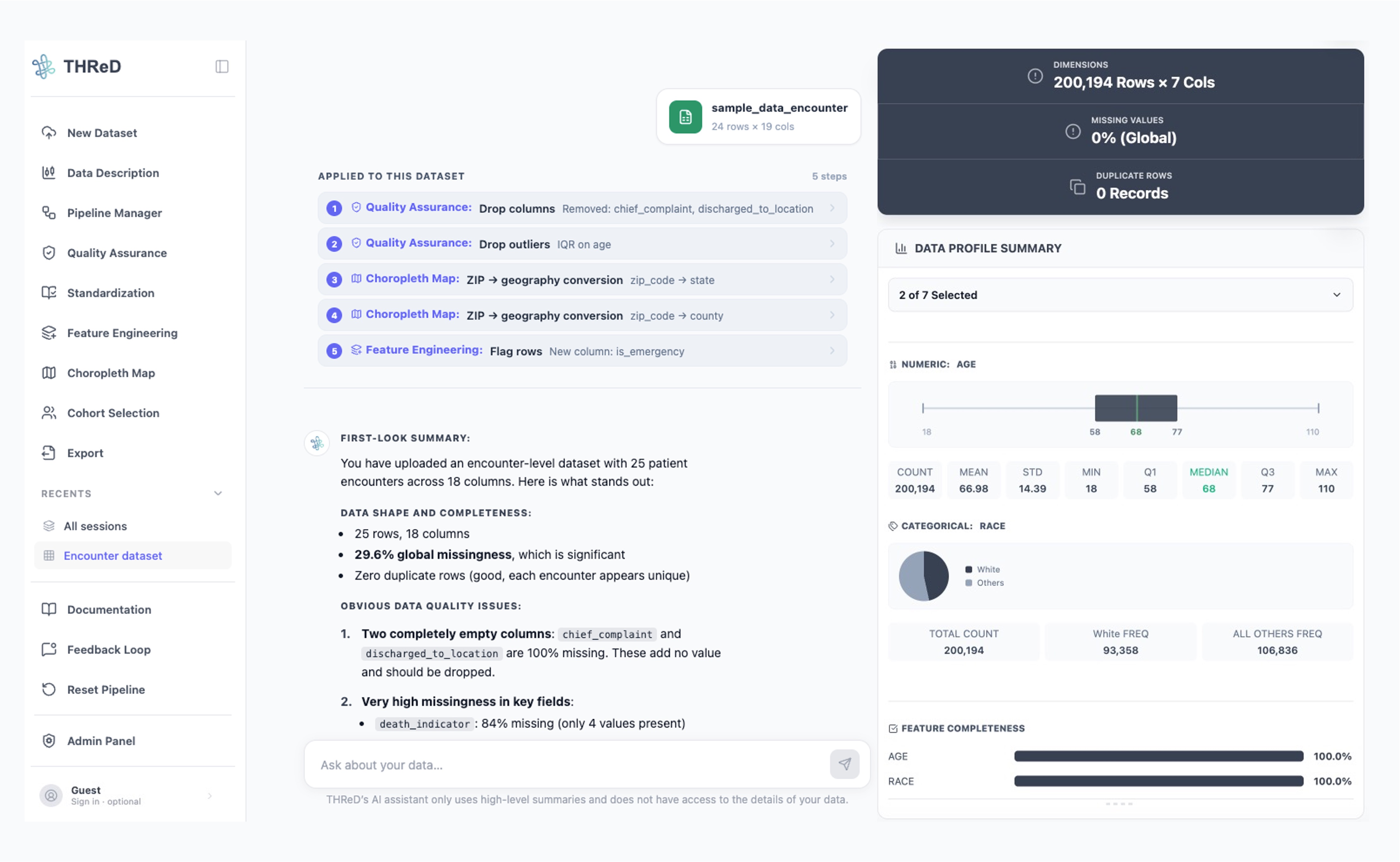
THReD: An Agentic System for Transforming Electronic Health Records into AI-Ready Datasets
Electronic health records offer rich clinical data for AI-driven research, but inconsistent formatting, mismatched coding, duplicate entries, and gaps in completeness make them difficult to use reliably. THReD is a modular, agentic platform that automates the transformation of raw EHR data into standardized, AI-ready datasets, and validation across 200+ million clinical records shows it substantially improves data quality, completeness, and consistency for scalable, reproducible clinical AI research.
More details →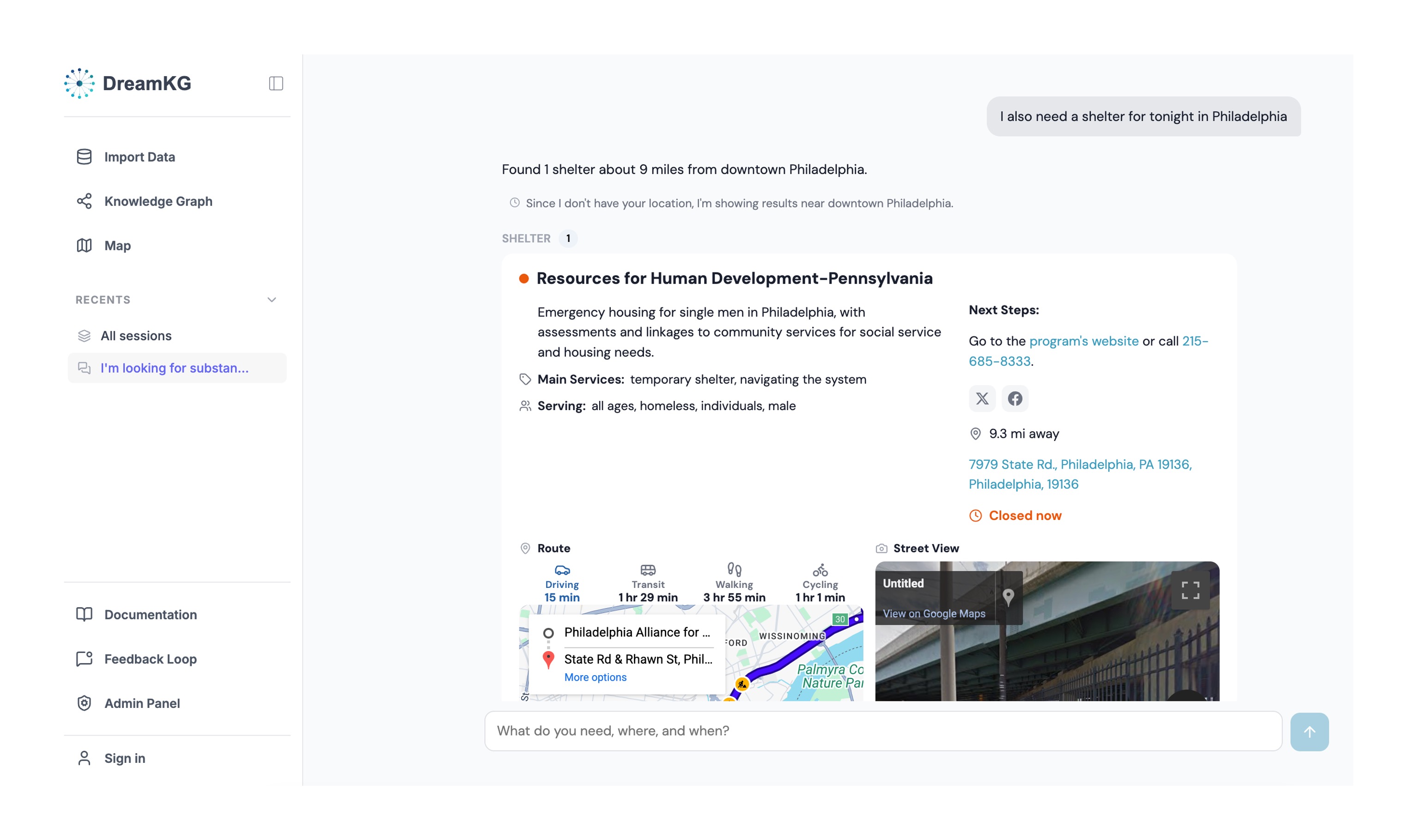
Agentic DreamKG: A KG-Augmented Conversational System for People Experiencing Homelessness
This ongoing project builds an agentic version of DreamKG, a knowledge graph-augmented conversational platform for community service navigation that grounds responses for people experiencing homelessness in verified, up-to-date data on shelters, food banks, mental health services, libraries, and Social Security offices across Philadelphia and Los Angeles. The platform combines a tool-using conversational agent with an autonomous data ingestion and entity-resolution pipeline to deliver location-aware, time-sensitive, and multi-stop service recommendations grounded in a continuously curated knowledge graph.
More details →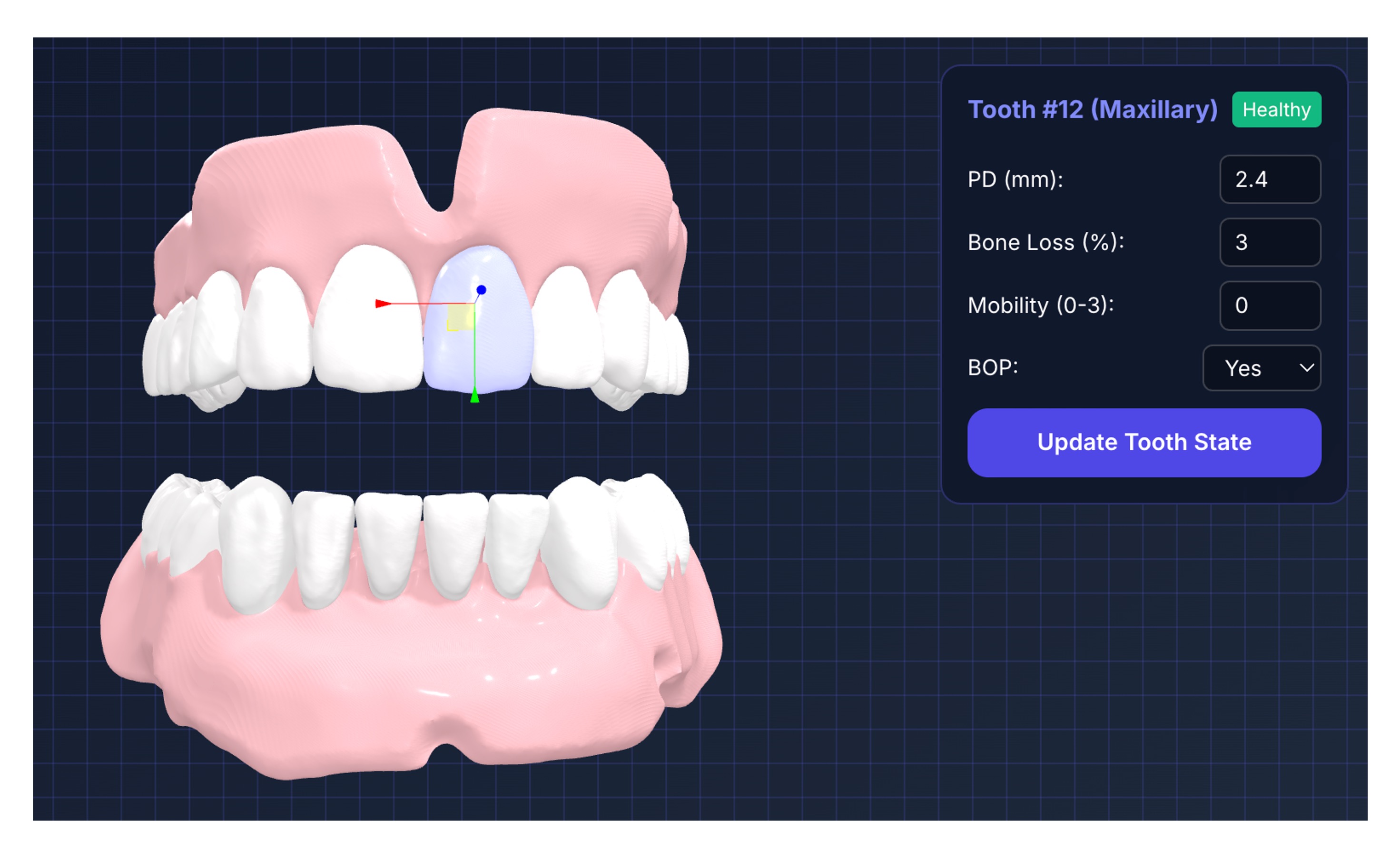
DT4OralHealth: A Digital Twin for Periodontal Disease Progression and Personalized Intervention Planning
DT4OralHealth is an ongoing project that builds a digital twin platform for periodontal disease, modeling patients at the level of individual teeth, gum regions, and jawbone by integrating longitudinal clinical data to predict personalized risk and simulate the effect of clinical interventions. The platform combines explainable machine learning with interactive visualization to give clinicians interpretable, individualized risk scores and actionable, patient-specific treatment recommendations.
More details →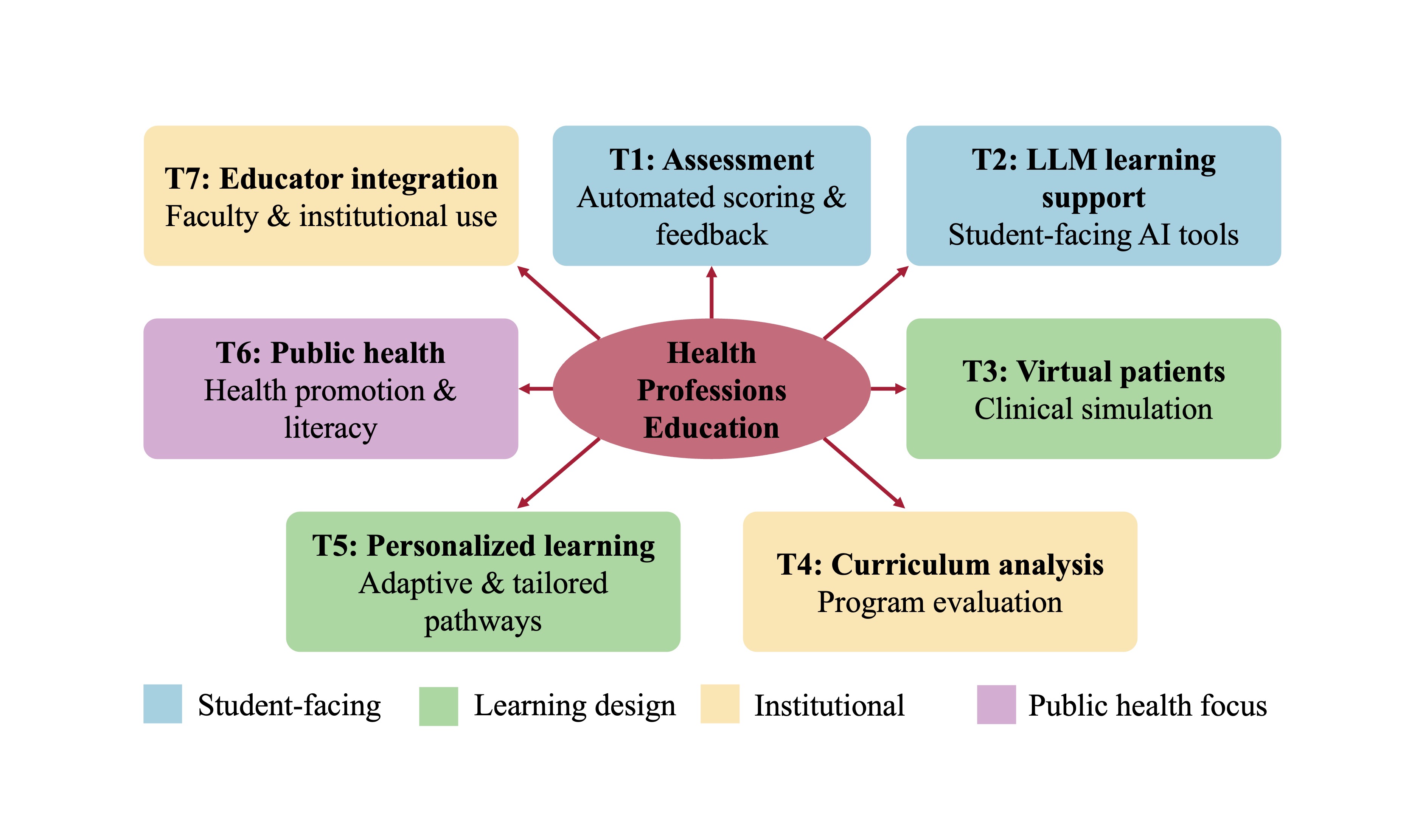
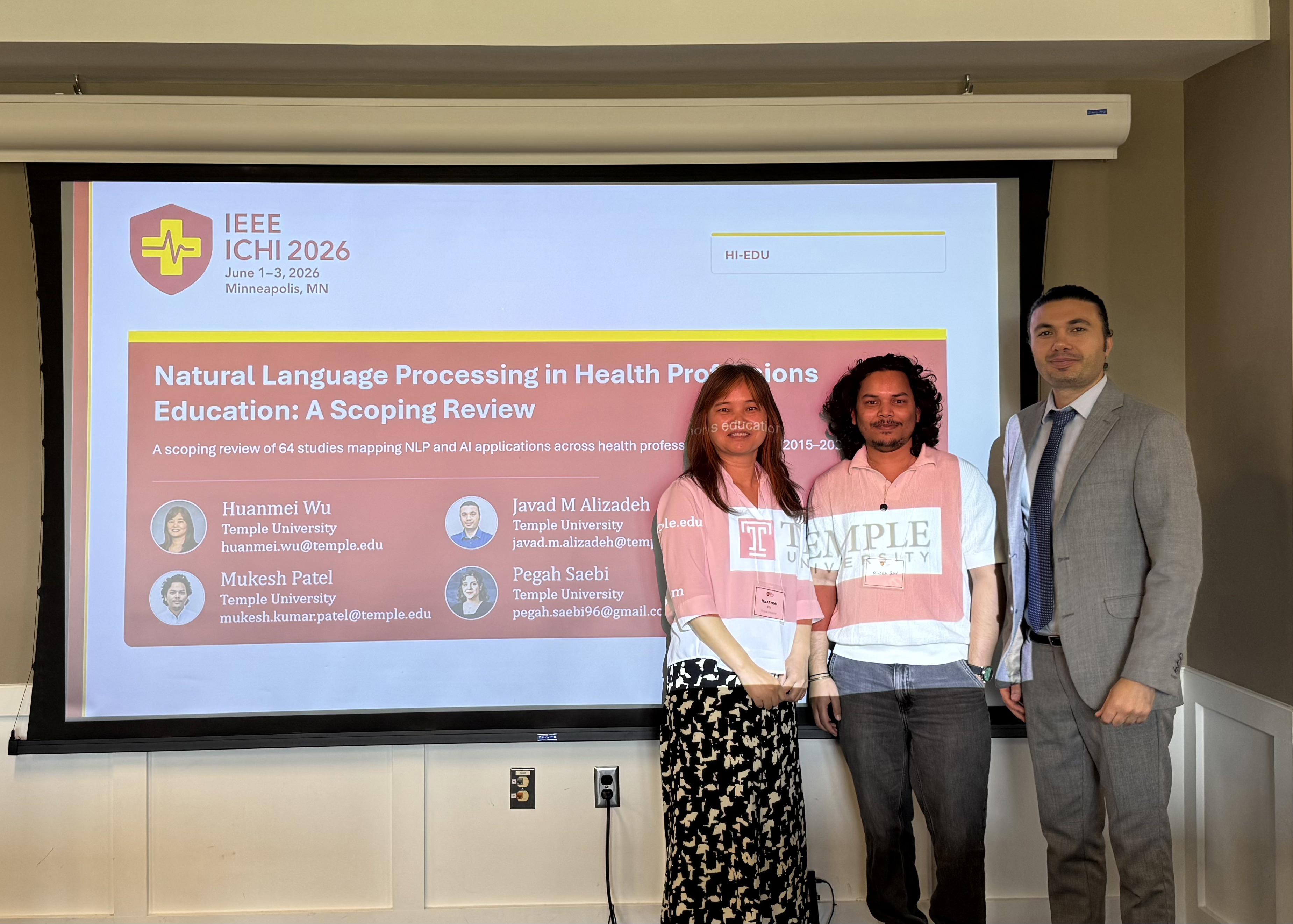
Natural Language Processing in Health Professions Education: A Scoping Review
NLP and AI are transforming health professions education by enabling automated assessment, virtual simulation, personalized learning, and curriculum analysis. This scoping review maps current applications across health education contexts, identifies key benefits and challenges, and highlights public health education as an underexplored area requiring further research.
Read paper →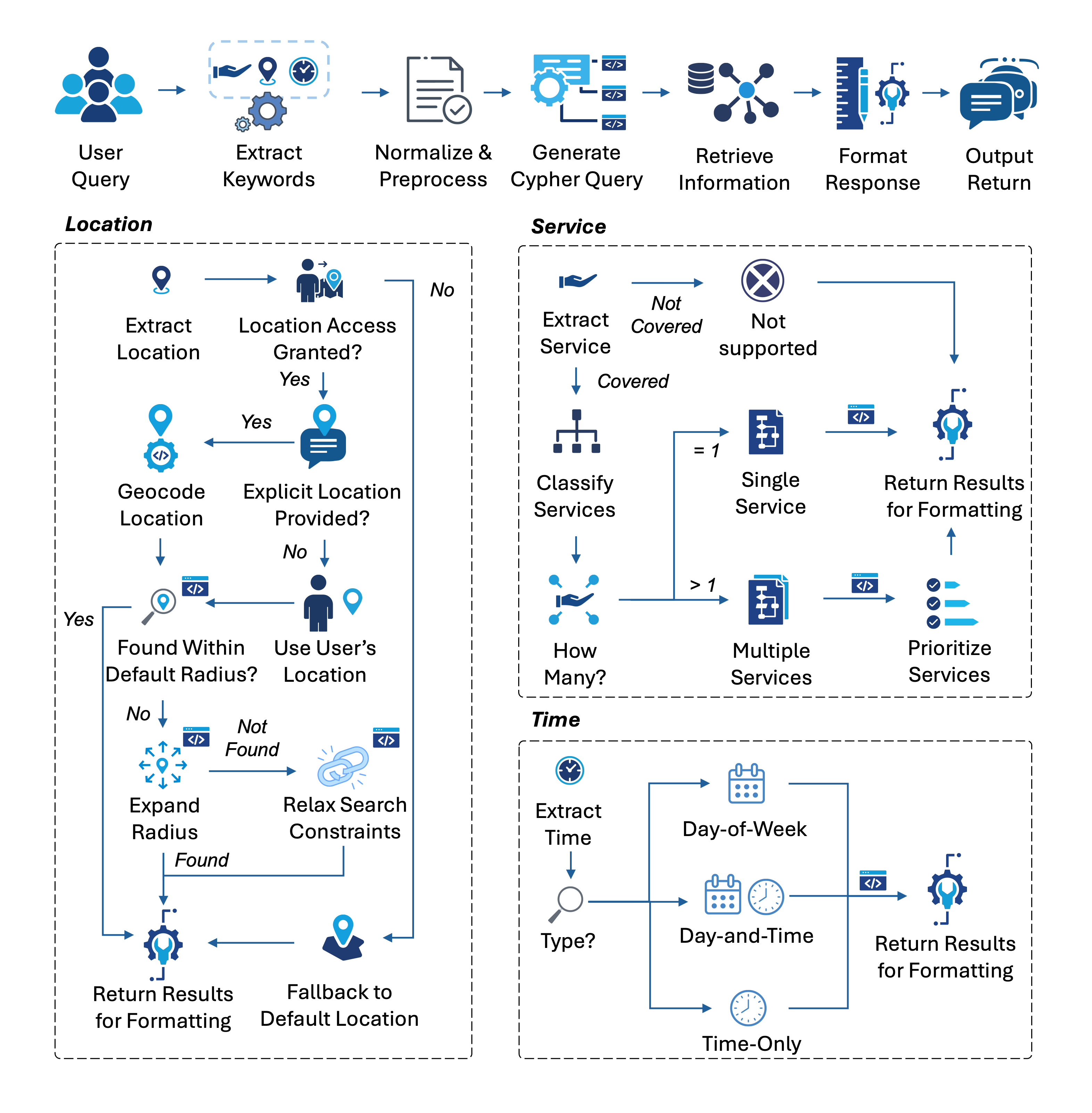
DreamKG: A KG-Augmented Conversational System for People Experiencing Homelessness
DreamKG is a RAG-powered chatbot that helps people experiencing homelessness find community services using a graph database for accurate, location-aware recommendations. Built as part of the NSF-funded Prototype Open Knowledge Network (Proto-OKN).
Read paper →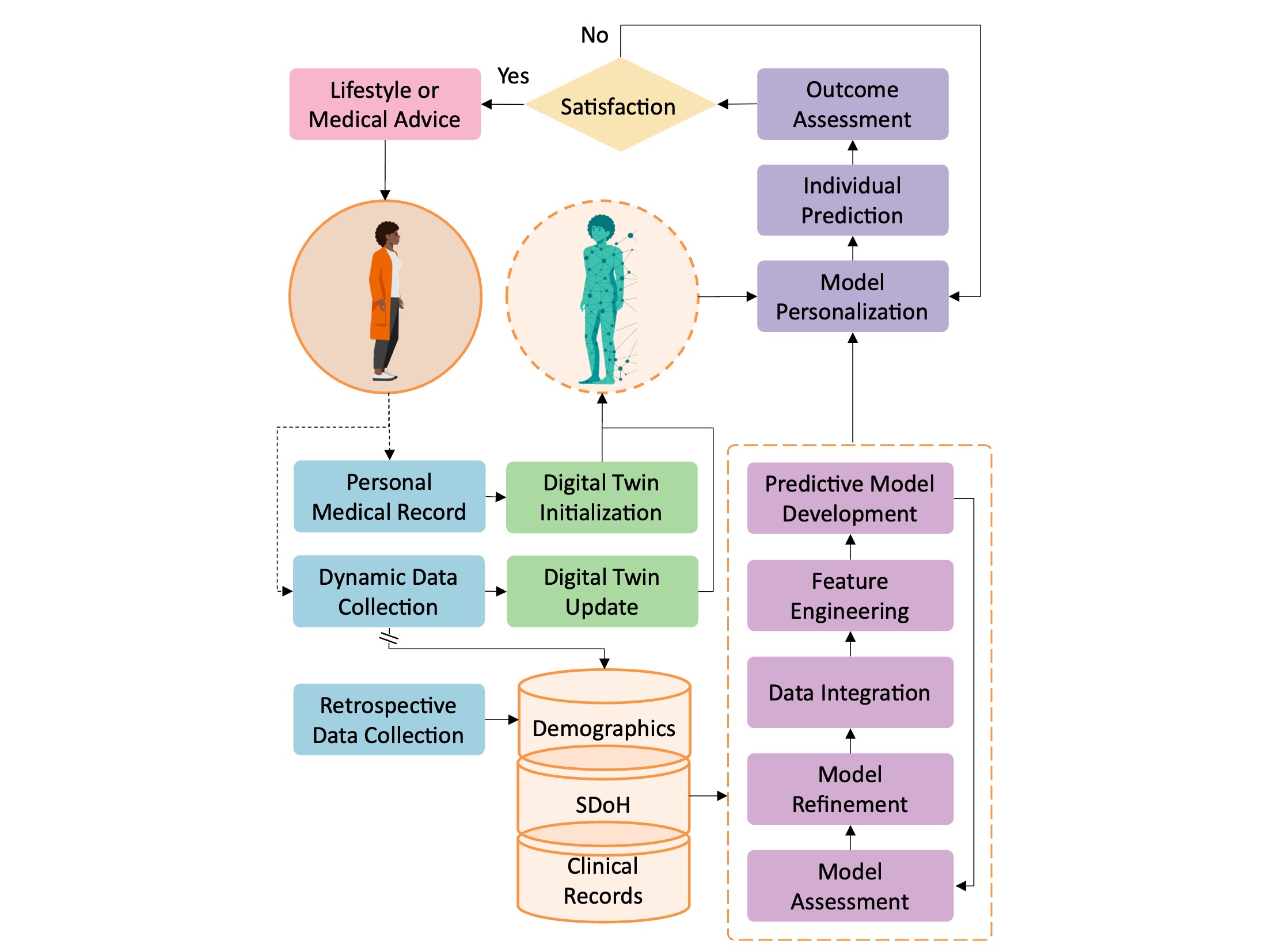
DT4PCP v1.0: Digital Twin Framework for Personalized Care Planning
A practical digital-twin framework (DT4PCP) for chronic disease: a real-time virtual model of a patient's health that predicts emergency-department risk, simulates interventions, and personalizes care for Type 2 diabetes.
Read paper →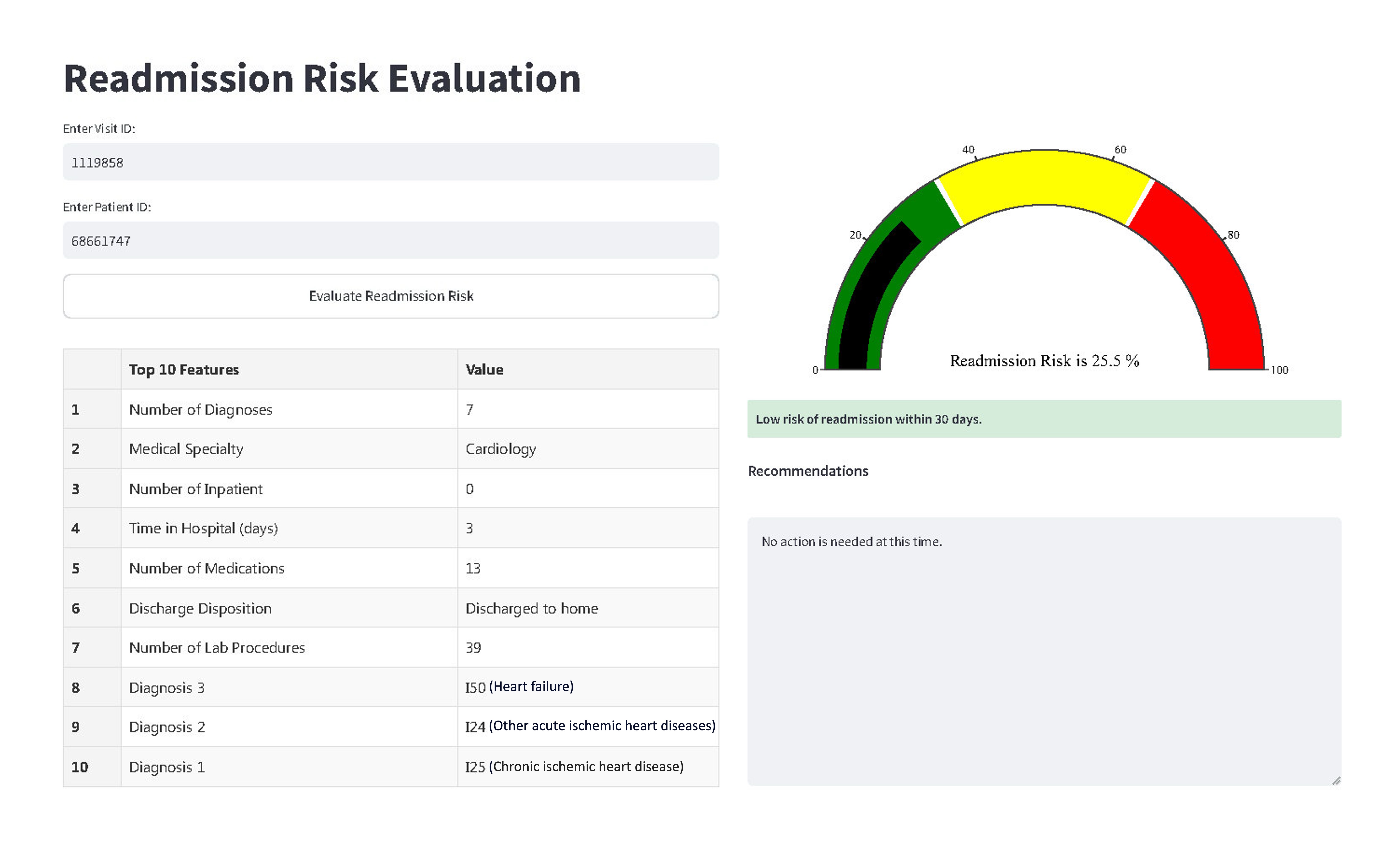
An AI-Powered Clinical Decision Support System for Patients with Diabetes: Integrating Machine Learning for Readmission Prediction and Large Language Models for Recommendations
An AI-powered clinical decision support system (CDSS) for diabetes that combines machine learning and large language models to predict 30-day hospital readmission risk, provide personalized recommendations, and support real-time clinical decision-making.
Read paper →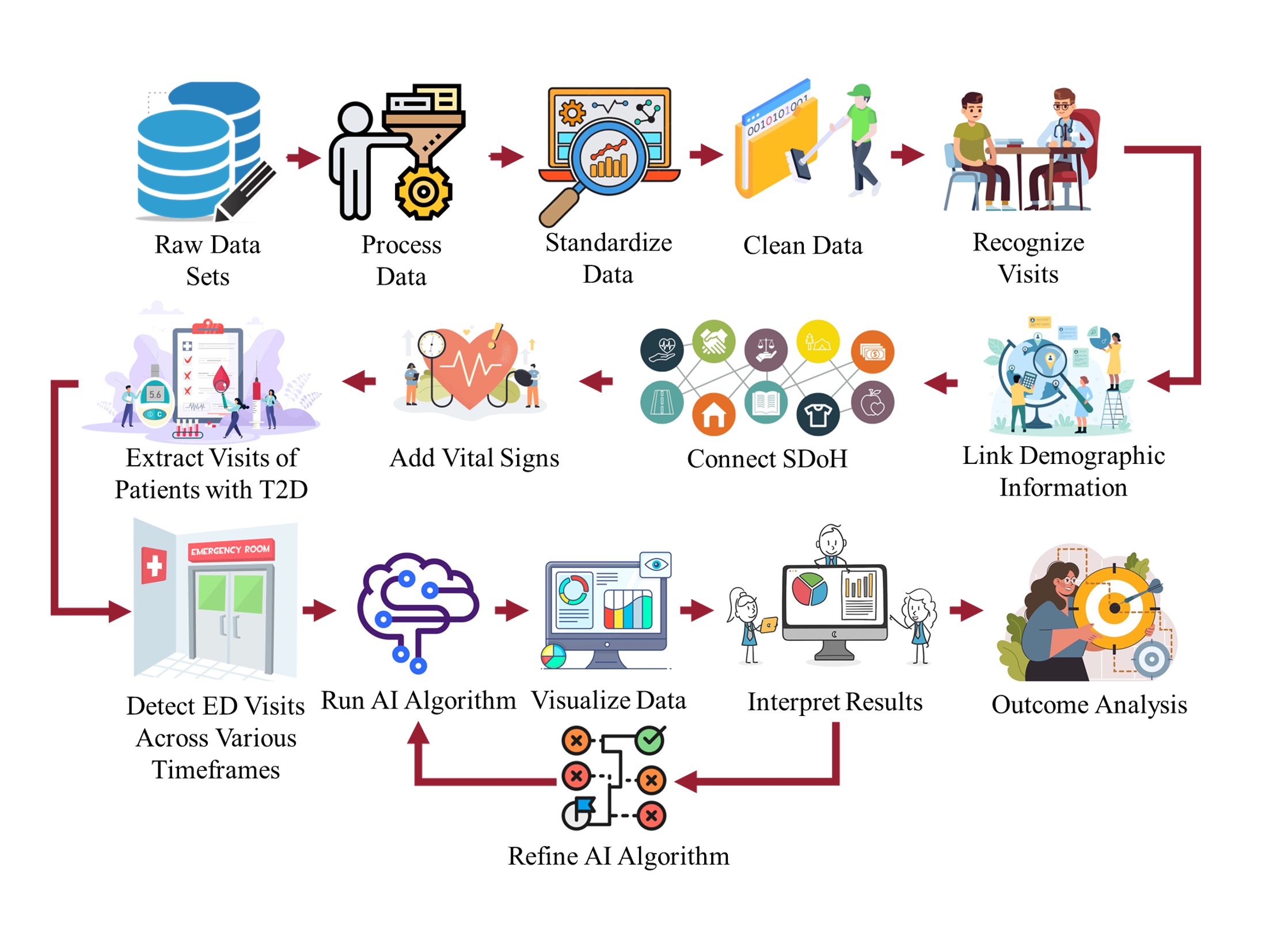
Predicting Emergency Department Visits for Type 2 Diabetes
ML models trained on 34,151 patients and 703,065 visits from the HealthShare Exchange. Ensemble Learning and Random Forest reached 0.82 AUC ROC, reliable tools for forecasting ED demand and enabling early intervention.
Read paper →Research you can actually use.
The Informatics Lab pairs rigorous data science with user-centered design, so complex models become interfaces people trust, for providers, social workers, and patients alike.
Developed pipeline runs from raw EHRs to deployment: cleaning and integrating messy records into analysis-ready datasets, developing predictive models, and putting them in front of clinicians through digital twins, decision-support systems, and interactive dashboards.
Each system is built for real-world workflow integration, technology that enhances, rather than disrupts, how care is delivered. Research outputs have been presented at AMIA, APHA, ICHI, CHASE, PAKDD, and the College of Physicians of Philadelphia.
Digital Twins & Care Planning
Real-time virtual patient models that personalize care for chronic conditions like Type 2 diabetes and hypertension.
Predictive Modeling & AI
Machine learning models that forecast adverse health outcomes, such as emergency visits and hospital readmissions.
Knowledge Graphs & LLMs
Graph databases and retrieval-augmented generation powering accurate, conversational search.
Clinical Decision Support
Predictive analytics paired with generative AI for personalized treatment guidance.
EHR Data Engineering
Reproducible pipelines that turn messy electronic health records into analysis-ready datasets.
Community Health AI
Conversational tools connecting vulnerable populations, including people experiencing homelessness, to care.
Presenting the work
A look back at conference and symposium presentations. Swipe through the gallery from each event.
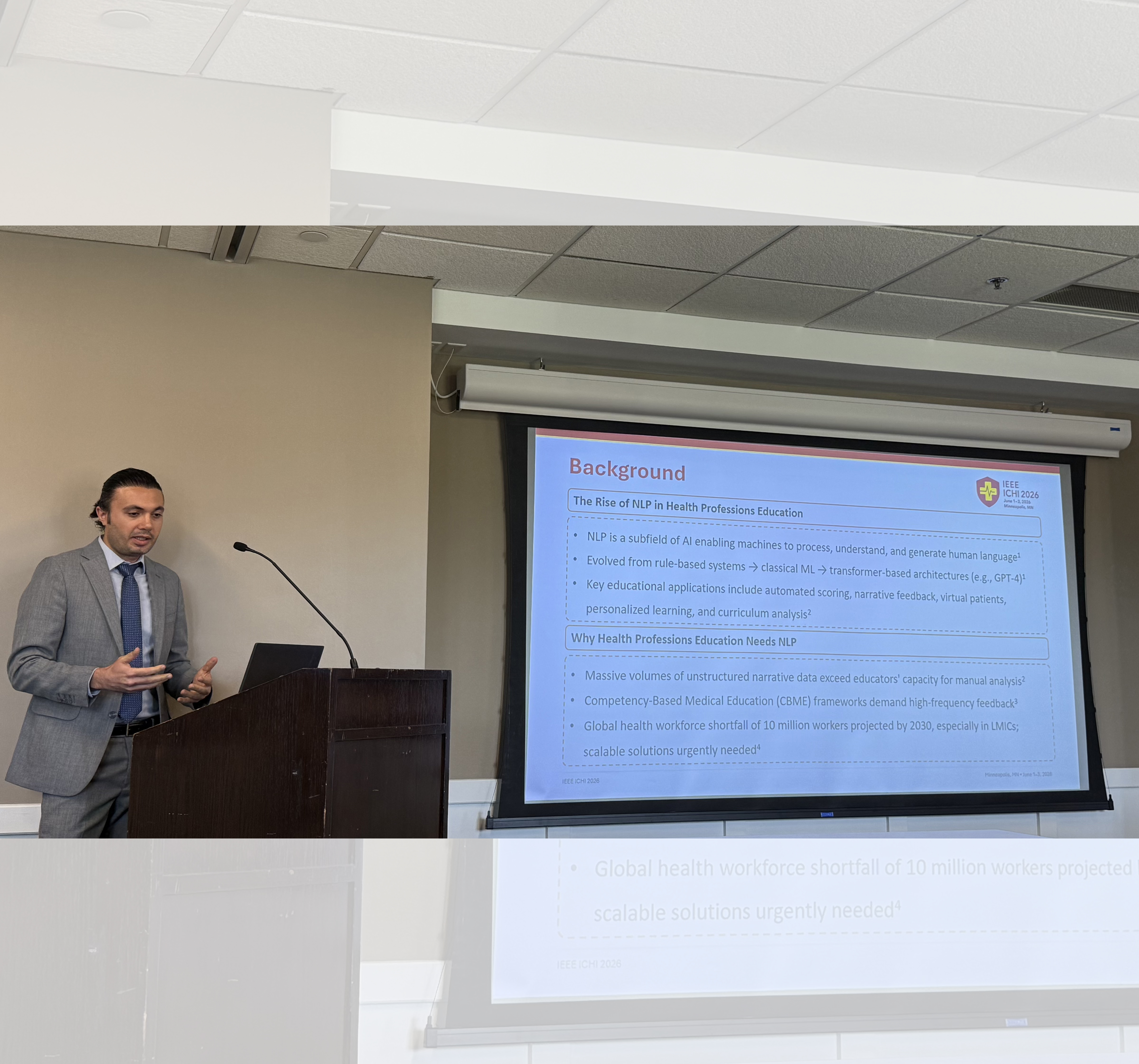
Natural Language Processing in Health Professions Education: A Scoping Review
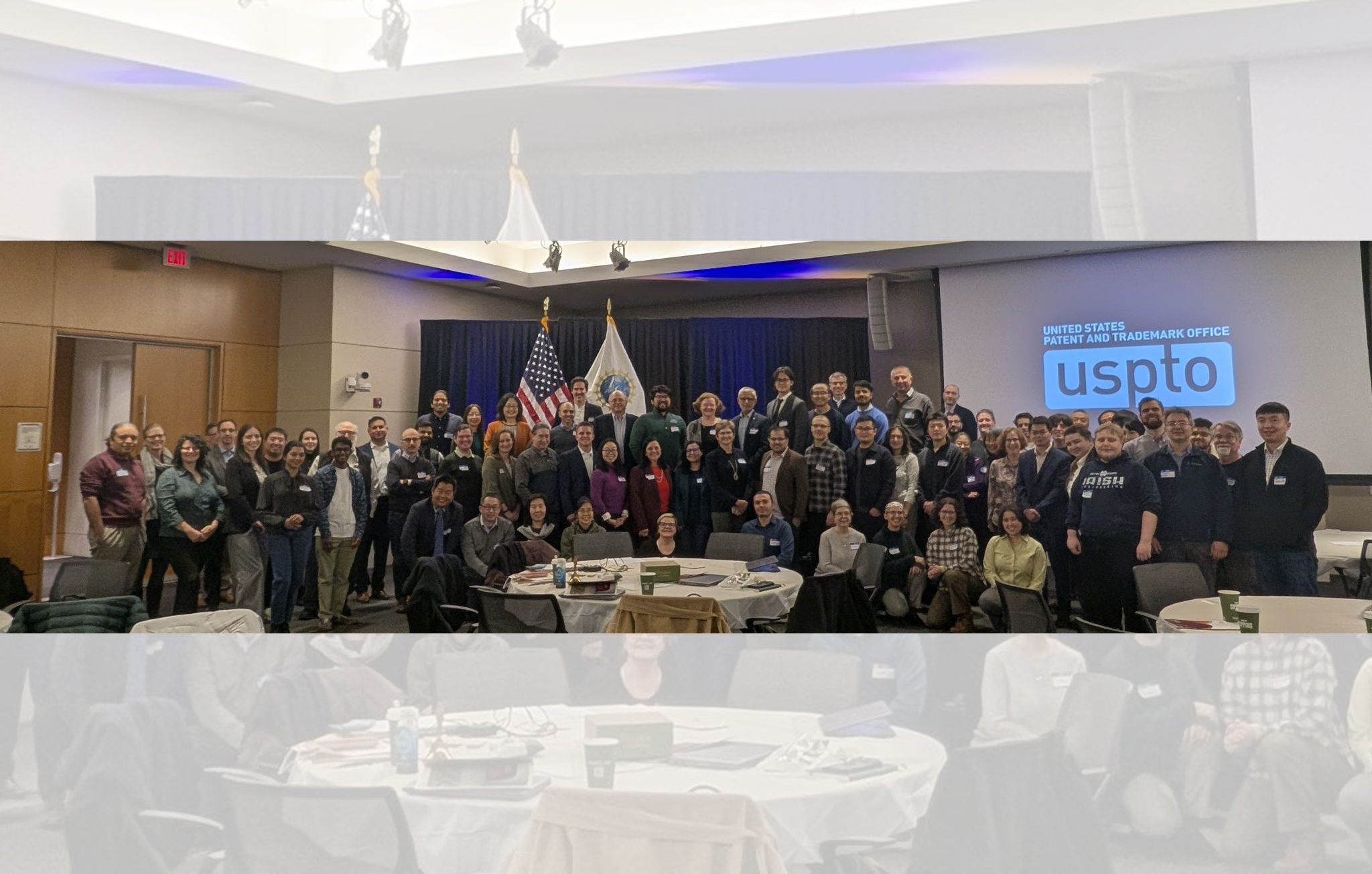
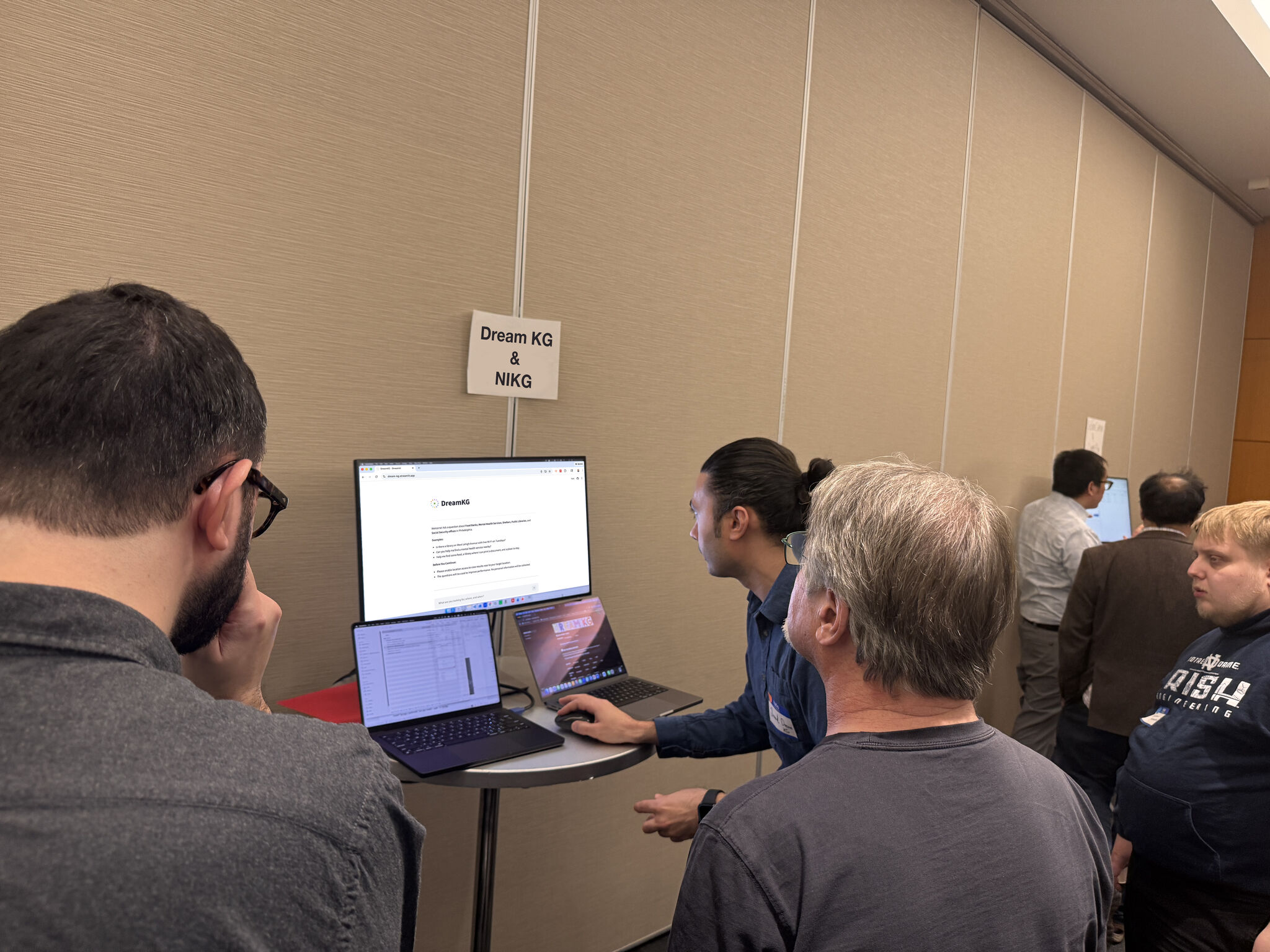
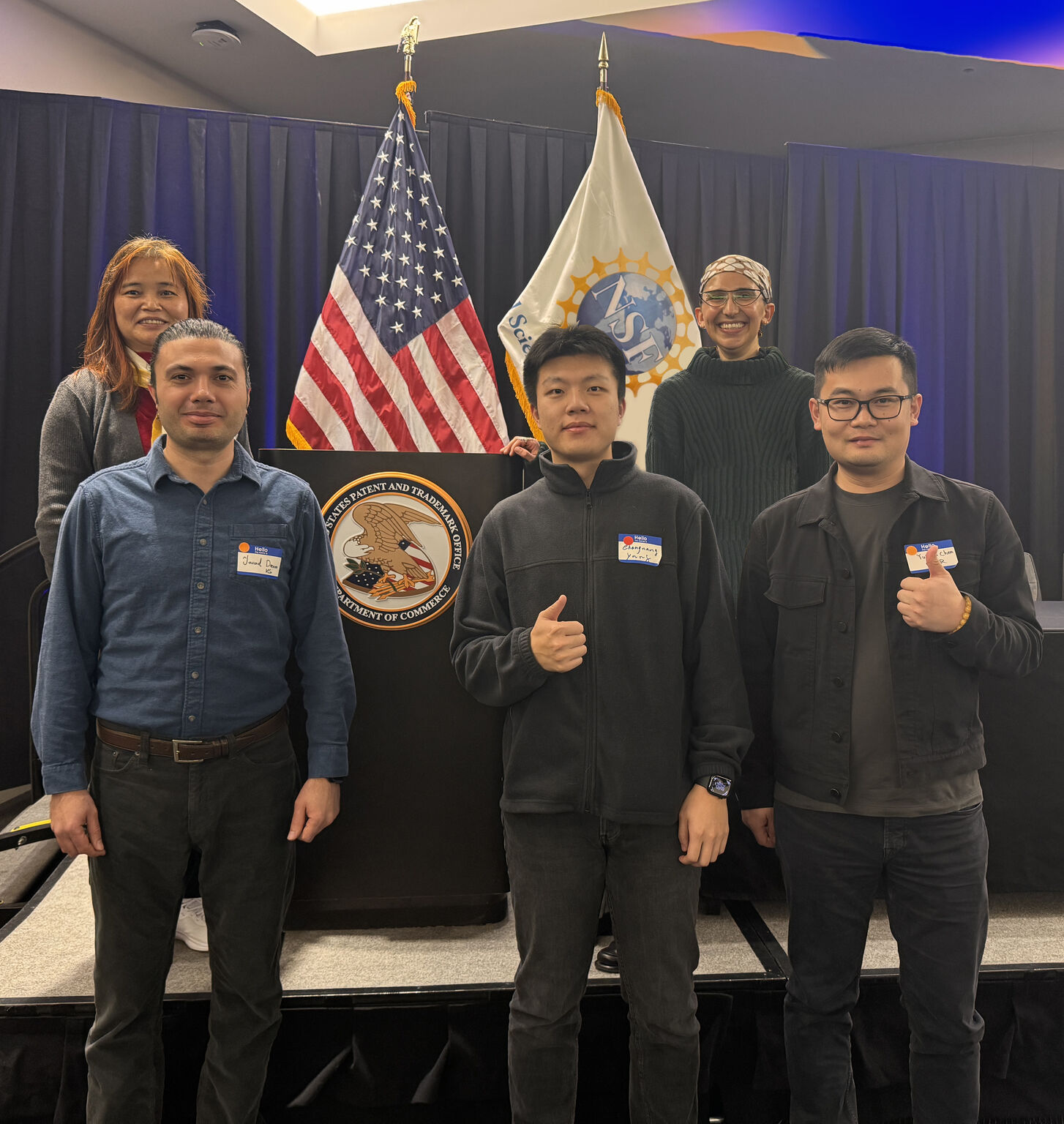
Dynamic, Responsive, Adaptive, and Multifaceted Knowledge Graph (DREAM KG)
Let's build something for healthcare.
For research partnerships, consulting, or technical collaboration, inquiries are welcome.
info@theinformaticslab.com →